Top 7 Mistakes to Avoid When Investing in Bali Real Estate


The Bali Property Market
The Bali property market has become a magnet for foreign investors and foreign buyers seeking both lifestyle and investment opportunities. With its breathtaking scenery, vibrant culture, and a growing infrastructure, Bali offers a unique blend of tropical paradise and modern convenience.
As more people look to invest in Bali real estate, understanding the local market dynamics is crucial. Foreign buyers can only hold property in Bali through specific ownership titles, which makes it essential to understand the legal frameworks involved.
This article will guide you through the essentials of investing in Bali Real Estate, highlight the most common mistakes, and provide actionable tips to help you make informed decisions. Whether you’re considering a holiday villa, a commercial property, or a long-term investment, knowing the ins and outs of the Bali property market is the first step to a successful purchase.
Why Bali Attracts Global Buyers

Bali’s allure goes far beyond its stunning beaches and lush rice fields. As a strategic hub in Southeast Asia, the island draws foreign investors with its thriving tourism sector, diverse property options, strong rental demand, and top lifestyle appeal.
From luxury villas to commercial properties, Bali offers something for every type of real estate investor. The Indonesian government has taken steps to streamline property transactions, enhance legal protection for foreign buyers, and build new infrastructure projects on the island, making the process of acquiring property in Bali more transparent, appealing and secure.
Working with a knowledgeable real estate partner is essential—they can help you navigate the legal landscape, identify the right properties, and ensure your investment is protected.
Key Trends and What They Mean for You
The Bali property market is evolving rapidly, with several trends shaping the way foreign investors approach the market. One major shift is the rising demand for sustainable and eco-friendly properties, as both investors and renters seek greener living options.
Popular areas like Canggu and Ubud are seeing a surge in interest from digital nomads and expats, driving up property values and rental yields. Canggu, in particular, is a hotspot for digital nomads, influencers, and expats, making it a highly desirable area for property investment.
As you consider buying property in Bali, it’s crucial to stay informed about these trends and how they impact your investment strategy. Conducting thorough due diligence – such as checking land zoning, verifying property documents, and understanding hidden costs – will help you avoid common pitfalls and ensure a smooth property transaction. Staying ahead of market trends and being diligent in your research are key to making a successful investment in Bali.
Mistake 1: Not Understanding Property Laws for Foreigners
One of the most critical and common mistakes when buying property in Bali is not fully understanding the legal limitations placed on foreign ownership. Indonesian land law is unique and significantly different from that of Western countries, and assuming you can simply buy property outright as a foreigner can lead to costly consequences.
Buying property in a foreign country presents additional challenges, as foreign buyers must navigate unfamiliar regulations and procedures. Understanding local laws and seeking professional assistance is essential to ensure compliance and avoid legal pitfalls.
What the Law Actually Says
In Indonesia, foreign nationals cannot directly own freehold land (Hak Milik). This form of ownership is reserved exclusively for Indonesian citizens. Any attempt to purchase land under a local person’s name commonly referred to as a nominee agreement is illegal, unenforceable, and risky. The best way of investing in Bali real estate is through Leasehold properties, which is the safest, most commonly used and the most liquid form of investment.
Legal Ownership Options for Foreigners
Instead of freehold, foreigners have three legally recognised paths to secure property:
- Leasehold (Hak Sewa): The most common method. You lease the land for 25–30 years, often with extension clauses built in. Leaseholds are widely accepted and highly liquid in Bali’s real estate market, and the safest/cheapest way of entering the market.
- Hak Pakai (Right to Use): This allows foreigners to use a property for residential or commercial purposes. It typically lasts for 30 years and is renewable, though it can be more bureaucratic to obtain.
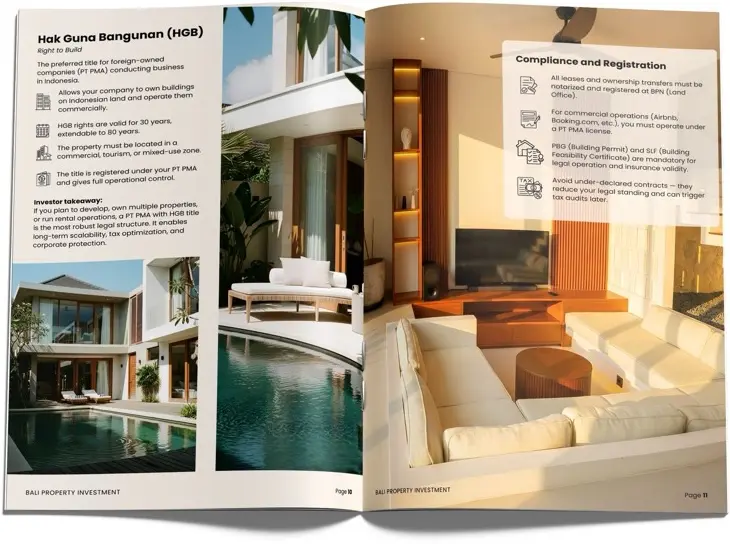
- PT PMA (Foreign-Owned Company): By establishing a business entity such as a PT PMA, foreign investors can secure property rights and optimise taxation. Foreign owned companies (PT PMA) are eligible for HGB titles (Hak Guna Bangunan), which grant both residential and commercial property rights, including development and resale rights.
Pro Tip: Never rely on handshake deals or nominee arrangements. Always go through a licensed notary and legal advisor who understands foreign investment law in Indonesia.
Why This Matters
Choosing the wrong ownership structure can:
- Make your investment vulnerable to legal disputes
- Prevent you from reselling or renting the property
- Lead to fines, property seizure, or invalid contracts
Understanding the correct legal framework is the foundation of a secure, profitable investment in Bali real estate.
Mistake 2: Skipping Land Zoning and Proper Due Diligence
Failing to check zoning laws and perform due diligence is one of the easiest ways to derail your Bali real estate investment. Even experienced investors can get caught out by assuming land is ready for development—only to find it’s in a protected or restricted zone. Always verify zoning rights with local authorities before proceeding with any property transaction or development.
Why Zoning Matters
In Bali, land is categorised under several zoning classifications that dictate what can be built and where. The three most relevant for investors are:
- Residential (Pemukiman): Suitable for homes and private villas
- Tourism (Pariwisata): Ideal for commercial rentals, villas, hotels
- Green (Hijau): Agricultural land — no building permitted
Just because land is near a beach or has a great view doesn’t mean it’s zoned for development. Buying land in the wrong zone can result in demolition orders, refusal of building permits, or an inability to register your property legally.
Key Due Diligence Checks You Must Perform
Before signing anything:
- Confirm zoning with the local BPN (National Land Agency) or a zoning consultant
- Check for road access — landlocked plots are common and problematic
- Request a copy of the Sertifikat Tanah (land certificate) and confirm it’s free of encumbrances or disputes
- Ensure the seller is the legal owner — many scams involve people selling land they don’t own or having many owners who can stop the process
- Make sure a valid IMB or PBG (building permit) is in place or can be obtained
Tip: Even if the land has a beautiful listing or great online reviews, don’t trust it blindly. Visit in person, verify documents through a trusted notary (notaris), and consult with a local legal team familiar with Bali property law.
Consequences of Skipping Due Diligence
- Loss of your deposit or full payment
- Legal battles over ownership or land boundaries
- Inability to obtain construction or rental permits
- Complete loss of your investment in some cases
Zoning and document verification are non-negotiable parts of the buying process in Bali—and skipping them is one of the costliest mistakes you can make.
Mistake 3: Overlooking Hidden Costs & Taxes
Many buyers focus only on the listing price when buying real estate in Bali, only to be blindsided by a range of hidden fees, taxes, and legal costs. These additional expenses can significantly impact your ROI and even lead to financial stress if unaccounted for.
Common Hidden Costs in Bali Property Purchases
- Notary & Legal Fees: Legal documentation and contract processing typically cost 1–2% of the property value.
- Land & Building Tax (PBB): An annual tax paid by the property owner, usually small but varies based on size and usage.
- Due Diligence & Zoning Checks: Verifying land certificates, zoning, and building permits costs money—but skipping this is far riskier.
- IMB/PBG Permit Fees: If you’re building or modifying a villa, the building permit (now PBG) adds administrative and consultant costs.
- Furniture & Fit-Out Costs: If you’re buying off-plan or an unfurnished property, don’t forget to budget for furniture, landscaping, and appliances.
- Ongoing Management Costs: For rental villas: housekeeping, pool cleaning, internet, and electricity are recurring expenses that affect rental yield.
Taxes to Watch Out For
- Acquisition Tax (BPHTB): 5% of the declared property value (paid by the buyer)
- Capital Gains Tax: 2.5% on resale (typically paid by the seller)
- Income Tax: If you’re renting your property, you may be liable for income tax in Indonesia (10% to 20% range depending on structure)
Pro Tip: Always ask for a full financial breakdown before committing to any purchase. Use that to calculate your total cost of ownership — not just the sale price.
Why It Matters
Ignoring these expenses can shrink your real estate ROI in Bali, surprise your cash flow, or lead to compliance issues. Understanding the full cost structure helps you plan better, negotiate smarter, and invest more confidently.
Mistake 4: Letting Emotion Drive the Purchase
Bali has a way of stealing hearts — but when it comes to investing in Bali real estate, falling in love with a property shouldn’t replace hard financial logic. Too often, buyers choose villas based on their dream lifestyle rather than real-world investment fundamentals.
The Problem with Emotion-Driven Decisions
That beachfront villa with bamboo walls and ocean breezes may feel like the one — but does it generate consistent rental income? Is the location near demand drivers like co-working hubs, nightlife, or wellness centers? What’s the average occupancy rate in that area?
Tourist appeal does not automatically equal investment success.
Emotion can lead you to overpay, ignore legal or zoning red flags, and underestimate future costs.
How to Balance Emotion with Smart Investing
- Run a Comparative Market Analysis (CMA): What are similar properties renting or selling for in the same area? A good CMA will show whether you’re overpaying or getting a strong deal.
- Review Local Rental Demand: Is the villa in a tourist zone like Canggu or Seminyak with steady bookings? Or is it in a remote area that’s tough to rent out?
- Look at Resale Potential: Will this property still appeal to future buyers? Is it aligned with what the market wants — or just what you want?
- Get a Professional Valuation: Don’t rely on emotion or seller promises. An independent valuation gives a realistic view of the property’s true market value.
Working with experts and conducting thorough analysis helps ensure you make the right choice for your investment goals.
Why It Matters
Buying based on emotion might feel great now — but poor cash flow, long vacancies, or difficulty selling later will hurt your ROI. Think like a savvy investor: buy for the numbers, and let the beauty be a bonus.
Pro Tip: Ask yourself, “Would I still buy this if I never lived in it?” If the answer is no, pause and re-run the math.
Mistake 5: Trusting the Wrong People
One of the most expensive mistakes when investing in Bali real estate is placing your trust in the wrong people. The island’s booming property scene has attracted its share of unqualified agents, shady developers, and even corrupt notaries — and foreign buyers are often the easiest targets. Real estate agents should possess a property broker certificate and AREBI membership to ensure professionalism and legitimacy. Bali’s informal networks and relaxed charm can be deceptive.
There have been multiple cases of international buyers — especially Australians and Europeans — losing hundreds of thousands to:
Real Risks Behind the Tropical Smile
- Fake land ownership deals
- Notaries working with sellers to forge or hide documents
- “Nominee” arrangements that are illegal and unenforceable under Indonesian law
- Developers collecting down payments and vanishing before completing the build
How to Vet the People You Work With
Collaborating with real estate professionals who offer a comprehensive range of services—such as property management, legal assistance, and transaction support—can simplify the process and provide expert guidance throughout your Bali property journey.
- Licensed & Transparent Agents: Choose real estate agents registered with local authorities (and ideally a member of AREBI, Indonesia’s official real estate association). Ask for proof of license and recent deals with foreigners.
- Verified Notary (Notaris): Your notary should be independent, fluent in English, and willing to walk you through every legal document — not just rubber-stamp what the developer provides.
- Reputable Developers: Look for a track record of completed projects, verifiable client testimonials, clear construction timelines, and transparency in build quality and permits.
- Due Diligence via a Legal Consultant: Hire a legal team experienced in foreign investment and Indonesian land law. They should perform title checks, verify zoning, and confirm the developer’s legal rights to sell the property.
Why It Matters
Even if the property is perfect, a bad actor in the process can undo everything. Contracts won’t protect you if the seller was never legally allowed to make the deal in the first place.
Pro Tip: Never pay a deposit or sign anything before your lawyer — not the seller’s notary — confirms the title and structure are clean.
Mistake 6: Managing Property Remotely Without Support
Buying real estate in Bali is just the first step — managing that property from overseas is where many investors fall short. Whether it’s a luxury villa in Canggu or a quiet retreat in Ubud, trying to handle maintenance, bookings, and guest communication remotely can lead to lost income and mounting stress.
The Reality of Remote Ownership
From leaky roofs to last-minute guest cancellations, owning a rental property in Bali comes with daily responsibilities. But if you’re based in Australia, Europe, or the U.S., the 10-hour time difference and language barriers make it nearly impossible to manage efficiently.
Missed maintenance leads to bad reviews. Delayed guest responses lower occupancy. Poor management = lower ROI.
Even tech-savvy owners using Airbnb or Booking.com often struggle to maintain high occupancy rates or respond to guest needs quickly enough to earn top ratings.
Why Local Support is a Must
- Professional Property Managers Boost Performance: A good property manager handles everything from bookings and guest check-ins to housekeeping, landscaping, and repairs. This keeps your rental experience smooth and guest reviews high.
- Hands-Off Doesn’t Mean Risk-Free: Without someone on the ground, you have no real insight into how your property is being treated, whether maintenance is timely, or if guests are happy.
- Better Financial Oversight: Reputable managers will provide detailed monthly income reports, handle staff payments, and monitor expenses — saving you time and keeping your investment profitable.
- Emergency Response Capability: When Bali has a power outage or your AC breaks mid-stay, having a trusted team on the ground ensures it gets fixed fast — without waking you up at 3AM.
Having trusted local management not only improves guest experience but also enhances the security of your property investment by ensuring your asset is protected and managed according to local regulations.
Why It Matters
Without local support, even the best villa can underperform. Rental success in Bali depends on guest experience, and that’s hard to deliver from a distance. A solid management partner turns your investment into a truly passive income stream.
Pro Tip: Before buying, research trusted property management companies in the area — and factor their fees into your ROI calculation.
Searching for a professional property management company?

Mistake 7: No Investment Strategy or Exit Plan
Many investors jump into investing in Bali real estate without a defined goal — and that’s a recipe for underperformance. Are you flipping for fast ROI? Renting short-term for income? Holding for long-term appreciation? Each path requires a different strategy.
Don’t Buy Without a Plan
Buying without knowing your exit is like sailing without a destination. You need clarity on:
- Your ROI timeline — 1 year? 5 years?
- Income goal — Monthly cash flow or equity gain?
- Usage — Personal stay + rental mix? Fully managed?
- Exit method — Resale, handover, lease extension, or PT PMA transfer?
Without a strategy, investors may face poor cash flow, tax surprises, or difficulty selling.
Examples of Tailored Strategies
- Off-Plan ROI Flip: Buy at launch price, sell at completion (typically 15–25% gain). Works well in hot zones like Canggu or Uluwatu.
- Short-Term Rental Income: Lease a 1–2 Bedroom villa with management. Focus on occupancy, nightly rate, and maximising booking platforms.
- Long-Term Hold + Appreciation: Choose undervalued areas (e.g., Padonan, North Canggu) and benefit from infrastructure growth + tourism trends.
- Buy with Exit in Mind: For leasehold, plan renewal or transfer 5 years after ownership. For PT PMA, structure the sale through a share transfer for tax efficiency.
Exit Planning Essentials
- Understand the leasehold timeline — and what happens when it ends
- Know how to exit legally
- Prepare property docs, permits, and performance history for resale
- Track resale windows based on tourism and market cycle
Pro Tip: Before you buy, write out your full exit plan. Ask: “Who will buy this after me — and why?”
Summary: Your Bali Property Success Checklist
Before you dive into investing in Bali real estate, take a moment to review the key pitfalls and how to avoid them. Smart investors follow a strategy, protect themselves legally, and surround themselves with the right local team.
When considering property in Bali, think carefully about whether an apartment, house, or villa best fits your lifestyle and investment goals. Each property type—apartments and houses included—comes with unique ownership and management considerations, as well as different legal and financial implications.
Top 7 Mistakes to Avoid:
- Not Understanding Legal Ownership → Learn leasehold vs. freehold, and use a compliant structure like PT PMA.
- Skipping Due Diligence → Always verify land title, zoning, and permits before signing anything.
- Underestimating Total Costs → Budget for taxes, notary fees, furniture, management, and contingencies.
- Letting Emotions Lead → Focus on ROI, location data, and rental demand—not just design or views.
- Trusting the Wrong People → Vet every agent, developer, and notary with real references and licenses.
- Trying to Manage Alone From Abroad → Hire a professional property manager to boost performance and reduce stress.
- Having No Strategy or Exit Plan → Define your income goals and resale timeline before you buy.